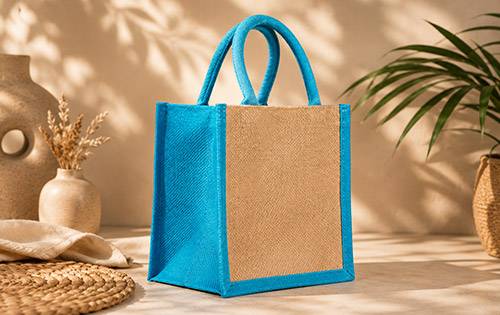
Switching to eco-friendly packaging sounds amazing, right? But the minute you sit down to order a few thousand custom totes, the process gets messy. Whether we need promotional giveaways for a trade show or sturdy branded retail bags, teaming up with reliable Jute Bag Manufacturers is the smartest way to lock in solid wholesale pricing. But pick the incorrect seller and you could be facing late delivery, popped seams or bags that smell like cheap chemicals. We’ve seen too many organizations go into bulk orders without reviewing the tiny print, or asking the necessary operational questions. Here are five important questions to ask before signing off on any purchase order to keep your branding on point and protect your budget.
What to Know Before Choosing Jute Bag Manufacturers for Bulk Orders
1. What are your actual minimum order quantities (MOQ)?
Start right here before you waste hours flipping through glossy product catalogs. Every production line operates on strict volume minimums. A massive export factory might turn away anything under 5,000 units, whereas a local workshop might happily run a small batch of 200 bags for a boutique brand.
Knowing their baseline immediately sets realistic expectations for your budget. If their minimum sits slightly above what you originally planned to buy, ask if they keep standard-sized blank bags in stock. Factories often drop their MOQs dramatically if they don't have to retool their cutting machines for custom dimensions. You also need to think about storage space. If you run a small office, ordering 10,000 bags just to get a cheaper per-unit price might backfire when you have nowhere to actually store the pallets. Always ask how their price tiers scale so you can find the sweet spot between volume discounts, and your actual storage capacity.
2. Can you ship a physical production sample first?
Digital mockups lie. A crisp PDF design might look absolutely flawless on your laptop screen, but it tells you nothing about weave density, handle durability, or how the fabric feels in your hand. At Gift & Promotions International, we always insist on hands-on evaluation before approving any physical product, because quality isn't something you guess—it's something you test.
Ask the vendor to ship an actual pre-production sample using your exact intended fabric weight. When it arrives, don't just look at it on a desk. Beat it up a bit. Tug hard on the handles, load it with heavy books or groceries, and inspect the inside stitching to see if the seams hold under pressure. If the bag has a waterproof lining, check if it feels like cheap, crinkly plastic. If a supplier hesitates or asks for a crazy fee just to send one single sample, take that as a massive red flag and walk away.
3. How do you print logos on rough, natural fibers?
Printing on burlap or raw jute is nothing like printing on a smooth cotton t-shirt. The heavy, uneven texture can easily warp small text, swallow fine lines, or cause ink to bleed if the factory uses the wrong technique. Clear communication here prevents a total branding disaster.
Screen printing usually works best for bold, blocky logos with one or two solid colors. The ink sits nicely on the textured surface. However, if your design has complex gradients, tiny fonts or multiple overlapping colors, they will need specialized digital transfer methods. Don't just take their word for it. Always ask for high resolution photographs of previous work that has a comparable logo to yours. If they can't offer you clear and readable samples of their past print work, they're probably not for your business.
4. How Do Expert Jute Bag Manufacturers Prove Their Eco Credentials?
Most companies buy natural fiber bags specifically to show their customers they care about the planet. But here is the catch: if a factory treats raw jute with harsh chemical glues, toxic inks, or non-biodegradable PVC inner linings, that entire eco-friendly message completely vanishes.
This is where you have to push for hard proof. Ask direct questions about their supply chain. Are the dyes certified AZO-free? Is the inner lamination not cheap plastic but biodegradable plant starch? Are they certified by established industry norms as GOTS (Global Organic Textile Standard) or Sedex, to ensure fair labor practices? Reputable Jute Bag Manufacturers will proudly share their factory audit reports and material certificates right away. If they dodge these questions with vague answers about "green practices," keep looking.
5. What does your end-to-end timeline actually look like?
"Fast turnaround" means very different things depending on who you talk to. A supplier might promise three-week manufacturing, conveniently forgetting to mention that ocean freight from overseas takes another six weeks to clear customs.
You need a detailed timeline broken down step-by-step. First, ask how many days they need to tweak and ship the physical prototype. Then, find out exactly how long the factory floor needs to cut and print your specific volume. Finally, pin down the transit time and ask who handles the customs paperwork. If you have a hard event date, like a major trade show, build in at least a two-week safety buffer. Global logistics, port strikes, and local holidays can be wildly unpredictable. A box of beautifully printed event totes arriving the day after your conference wraps up is completely useless.
Treat your first conversations with potential Jute Bag Manufacturers as a comprehensive job interview, and you will sift out shady middlemen and find actual professionals. Ask difficult questions early, demand to get your hands on the goods and look after your bottom line and your brand’s reputation.